Doxy-PEP FAQ: Doxycycline for STI Prevention
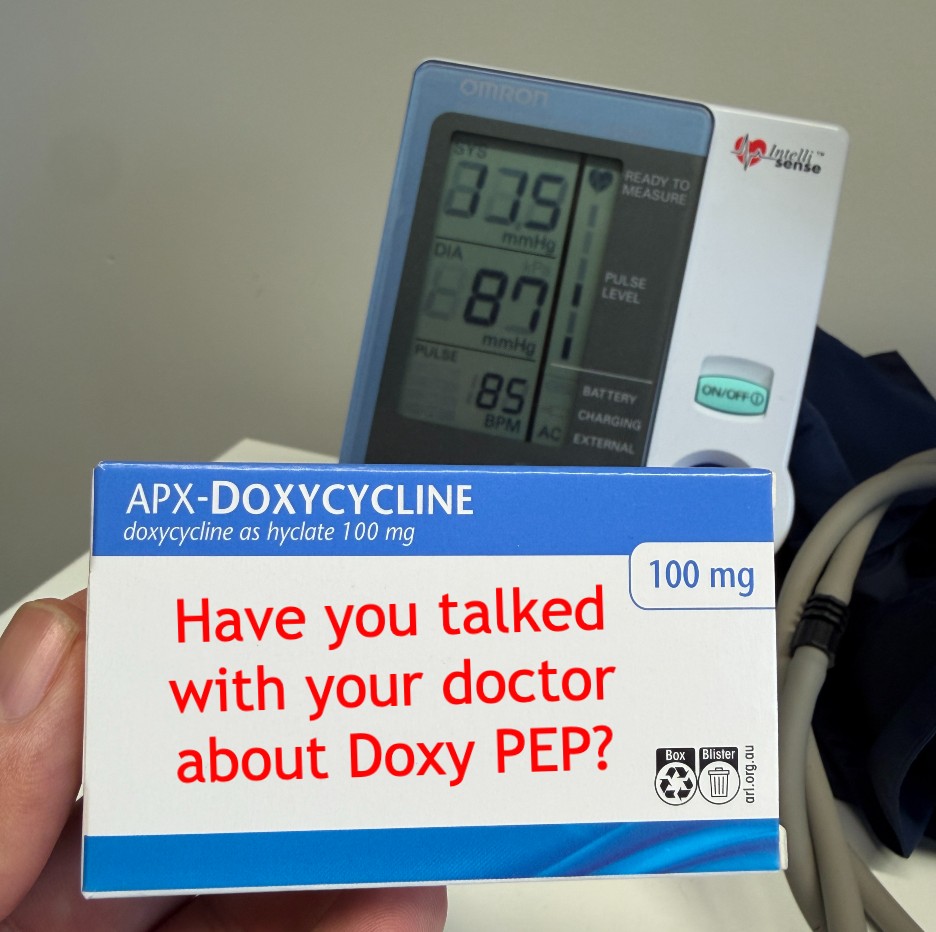
Doxy-PEP: What It Is, How It Works, and Whether You Should Be Taking It
By Dr George Forgan-Smith, GP Practising in Melbourne
If you’ve been on the apps, in the saunas, or just paying attention to gay health Twitter over the last couple of years, you’ve heard about doxy-PEP. Some guys swear by it. Some clinicians are cautious. The evidence is genuinely mixed depending on which infection you’re talking about.
So let’s actually walk through it properly. What it is, what the data says, and how to work out if it’s right for you.
What is doxy-PEP?
Doxy-PEP stands for doxycycline post-exposure prophylaxis. You take a single 200mg dose of doxycycline (a common antibiotic) within 24 to 72 hours after condomless sex. Sooner is better. The goal is to knock out bacterial STIs before they establish.
Think of it like the morning-after pill, but for syphilis, chlamydia, and (sometimes) gonorrhoea.
It’s not a daily medication. You only take it after a sexual encounter where you might have been exposed. Most guys end up taking it a few times a month, depending on how often they’re hooking up.
If you want the longer version, I’ve written a full guide on doxy PEP for preventing sexually transmitted infections that walks through the clinical detail.
Who’s it for?
In Australia, ASHM (the peak body for HIV and sexual health medicine) released consensus guidance in 2024 and updated it through 2025. The current recommendation is to consider doxy-PEP for:
- Gay and bisexual men (and other men who have sex with men)
- Trans women
- Anyone who’s had a bacterial STI in the past 12 months, or who’s having condomless sex with multiple partners and wants extra cover
UK guidance from BASHH lines up closely. The evidence base is built almost entirely on these populations, which matters for how confident we can be about the benefits.
It’s worth saying plainly: the evidence in cisgender women has been disappointing. The ZADOXY trial in Kenya didn’t show a clear benefit, though there are open questions about adherence. So for now, it’s not routinely recommended for cis women.
How well does it actually work?
Here’s where it gets interesting, because the answer depends on which bug we’re talking about.
Syphilis: the strongest data
Syphilis is where doxy-PEP shines. The landmark DoxyPEP study (San Francisco and Seattle) showed roughly an 87% reduction in syphilis infections in MSM and trans women on PrEP. The French DoxyVAC trial showed similar protection, around 79%.
Given how much syphilis has surged in gay communities over the last decade, this is a genuinely big deal.
Chlamydia: also strong
Chlamydia reductions sit in the 70 to 90% range across the major trials. Doxycycline has been first-line treatment for chlamydia for decades, so this isn’t surprising. The drug works.
Gonorrhoea: messy
This is the bit that makes me cautious, and where you’ll see clinicians disagree.
The DoxyPEP study showed about a 55% reduction in gonorrhoea. Decent, not spectacular. But the DoxyVAC study and a separate French analysis showed much less benefit, in some cases none.
Why the gap? Probably tetracycline resistance. Doxycycline is a tetracycline-class antibiotic, and a sizeable chunk of gonorrhoea strains in Australia are already tetracycline-resistant (the Australian Gonococcal Surveillance Programme has tracked this for years, and its 2024 report put national resistance at about 35%, up from the low-to-mid 20s and still climbing, with ongoing concern that wider doxy-PEP use could add to that pressure). If the bug you’ve been exposed to is resistant, doxy-PEP simply won’t touch it.
So when I talk to patients about gonorrhoea protection, I’m honest: you’ll get some benefit, but don’t bank on it. Regular screening still matters.
The antimicrobial resistance question
This is the legitimate worry, and it’s worth taking seriously.
When you use any antibiotic regularly, you nudge bacterial populations toward resistance. Doxy-PEP isn’t an exception. The concerns are mainly about:
- Gonorrhoea resistance getting worse over time
- Staph aureus on your skin becoming more tetracycline-resistant (which can matter if you ever need doxycycline for something like cellulitis or acne)
- Wider community resistance patterns if doxy-PEP becomes very widespread
Australian surveillance is watching this closely. So far the data suggests the population-level resistance trade-off is probably acceptable for the syphilis and chlamydia gains, but it’s something we’ll keep monitoring. If you’re using doxy-PEP, you’re part of that picture.
Let’s talk about the stigma
I want to address this directly because I hear it in clinic, and I see it online.
“Isn’t doxy-PEP just for sluts?”
No. And also, so what if it was?
Wanting to protect yourself from STIs while having the sex you actually want to have is the entire point of sexual health medicine. That’s what condoms are. That’s what PrEP is. That’s what the HPV vaccine is. Doxy-PEP is in the same family.
If you’re having sex with multiple partners, condomless or not, and you want a tool that reduces your chance of picking up syphilis or chlamydia, doxy-PEP is a reasonable option to discuss with your doctor. The number of partners you have doesn’t make you reckless. It makes you someone who likes sex.
I’ve watched the same shame cycle play out with PrEP a decade ago. Same arguments, same hand-wringing, same “but what about responsibility.” PrEP turned out to be one of the most important public health tools we’ve ever had for gay men. Doxy-PEP probably won’t be quite as transformative (the syphilis angle is the most useful piece), but the moral framing is identical, and it’s just as wrong now as it was then.
Sex-positive medicine isn’t about encouraging anything. It’s about meeting you where you are and giving you tools that work.
Should you be on it? A self-assessment
Run through these questions honestly. There are no wrong answers.
1. In the last 12 months, have you had a bacterial STI? Chlamydia, gonorrhoea, or syphilis. If yes, doxy-PEP is worth a serious conversation.
2. Are you having condomless anal or oral sex with multiple partners? Not a judgement, just a clinical question. The more exposures, the more potential benefit.
3. Are you on PrEP, or HIV-positive with an undetectable viral load? Most of the doxy-PEP evidence is in guys already on PrEP or living with HIV. If that’s you, the data fits your situation more directly.
4. Can you take doxycycline safely? Most people can. But if you’ve had a bad reaction to tetracyclines before, or if you have a history of severe reflux or oesophageal issues, talk to your GP first. Pregnancy is also a contraindication (relevant for trans guys who could be pregnant).
5. Are you happy to manage it properly? That means taking it within 72 hours (sooner the better), washing it down with a full glass of water, staying upright for 30 minutes after, and being mindful of sun exposure (doxy can make you burn faster).
If you’re answering yes to most of these, doxy-PEP is probably worth bringing up at your next sexual health visit.
If you’re rarely having condomless sex, or you’ve never had a bacterial STI, the benefit is smaller. Still your choice, but the maths shifts.
How to actually get it in Australia
Here’s the practical bit.
Doxy-PEP is off-label in Australia. Doxycycline itself is registered for plenty of things (acne, chlamydia treatment, certain pneumonias, malaria prophylaxis), but using it as STI post-exposure prophylaxis isn’t a TGA-approved indication. That’s fine, off-label prescribing is normal in medicine, but it does mean:
- It’s not on the PBS for this use
- You’ll pay private prices, usually $15 to $30 for a pack that lasts a while depending on how often you’re using it
- You need a prescription from a GP or sexual health doctor
Most LGBTIQ-friendly GPs and sexual health clinics in Sydney, Melbourne, and the other capitals are now familiar with it. If your usual doctor looks confused, that’s a sign to find someone with more sexual health experience. ASHM’s “Find a Doctor” tool is a good starting point.
Bring a list of your questions. Be upfront about your sex life. The more accurate the picture, the better the advice.
Side effects to know about
Doxycycline is a well-tolerated drug, but it’s not nothing. The common ones:
- GI upset (nausea, occasional diarrhoea). Taking it with food helps.
- Photosensitivity. You’ll burn faster in the sun. Australian sun is unforgiving at the best of times, so factor this in if you’re heading to the beach.
- Pill oesophagitis. This is why we tell you to take it with a big glass of water and stay upright for at least 30 minutes. Lying down right after swallowing can let the tablet sit against your oesophagus and cause a nasty ulcer.
- Thrush (oral or genital), occasionally, because antibiotics knock out normal flora.
Serious reactions are rare. If you get a rash, swelling, severe headache, or anything that feels properly off, see a doctor.
When to see a doctor
Doxy-PEP doesn’t replace regular sexual health care. You still need:
- Quarterly STI screening if you’re having multiple partners (throat, rectal, urine, plus blood tests for syphilis and HIV)
- PrEP review if you’re on it
- Symptom-driven visits anytime something feels wrong
See your doctor sooner rather than later if you notice:
- Discharge from the penis or anus
- Painful urination
- Sores, ulcers, or rashes (especially on the genitals, mouth, or palms and soles)
- Sore throat that won’t shift
- Swollen lymph nodes
- A new rash a few weeks after a hookup (could be secondary syphilis)
Bacterial STIs are very treatable when you catch them. They cause real damage when you don’t.
The bottom line
Doxy-PEP is a useful tool, especially for syphilis and chlamydia, in the right person. The gonorrhoea data is mixed and the resistance picture matters. It works best as part of a wider approach: regular screening, PrEP if appropriate, vaccinations (hep A, hep B, mpox, HPV), and an honest relationship with a doctor who isn’t going to flinch when you describe your sex life.
If you’ve been wondering whether it’s for you, book in and have the conversation. That’s literally what we’re here for.
Look after yourselves, team.
Dr George
This information is general in nature and not a substitute for personalised medical advice. Speak to your doctor about your specific situation.
Dr George Forgan-Smith, GP, practising in Melbourne.
Key references
- ASHM Doxy-PEP Consensus Statement (2024, updated 2025)
- BASHH UK guidance on doxycycline post-exposure prophylaxis (2024)
- Luetkemeyer AF et al., DoxyPEP trial, NEJM 2023
- Molina JM et al., DoxyVAC trial, Lancet Infectious Diseases 2024
- Australian Gonococcal Surveillance Programme reports
- Therapeutic Guidelines: Antibiotic